New Drone-Mounted Biosensor Detects Dengue Antigens From Serum Within Seconds
A novel flying diagnostic platform pairs gold nanoparticles with artificial intelligence to spot viral outbreaks in hard-to-reach locations.
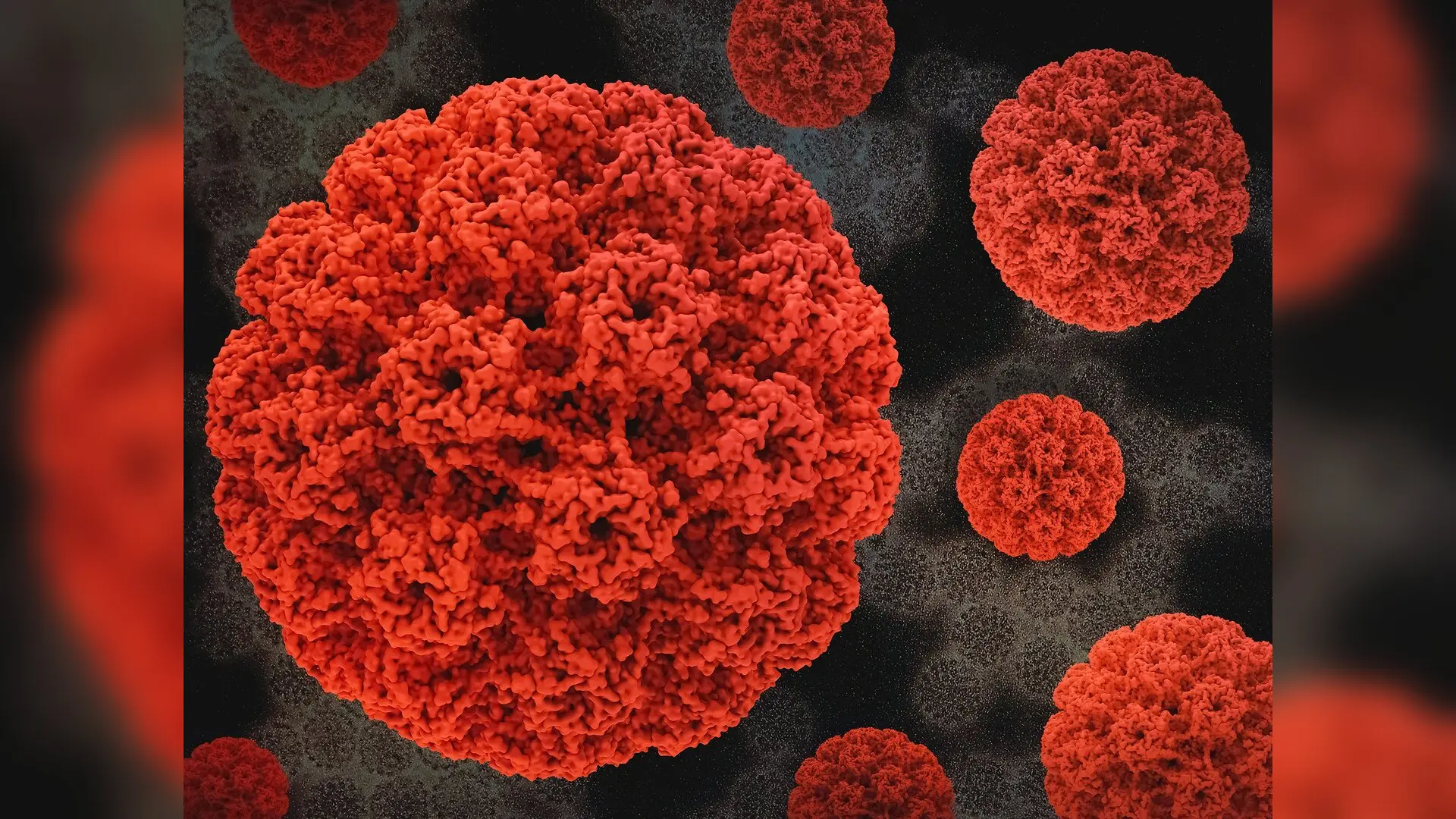
A new unmanned aerial vehicle platform carrying a smartphone-linked diagnostic kit can identify dengue viral antigens within five seconds from a drop of fluid. The laboratory-engineered setup aims to solve the critical problem of delayed sample transport during infectious disease outbreaks in densely populated or hard-to-reach urban regions.
How Does the Lab-On-Drone Dengue Sensor Operate in the Field?
Developed to assist public health workers during mosquito-borne epidemics, the system merges a lightweight flying drone with a paper-based testing strip known as a lateral flow assay. Researchers integrated gold nanoparticles bound to specific DNA molecules called aptamers onto the paper strip. When a patient sample containing dengue viral proteins touches the sample pad, the target proteins bind to the aptamers and trigger a conformational change that releases the gold nanoparticles. The released nanoparticles then travel along the membrane via capillary action to form a visible red line when they encounter immobilized lysozyme enzymes.
The entire biochemical reaction takes place inside a protective Plexiglas casing mounted securely on top of a compact commercial drone weighing less than 249 grams. A QR code printed on the front of the aircraft links directly to a digital reporting platform named Delhi Against Dengue. This interface transmits test outcomes and patient data instantly to nearby health authorities, bypassing the need for centralized laboratory infrastructure.
What Were the Laboratory Findings and Detection Limits?
The study, published in Frontiers in Bioengineering and Biotechnology by Mohammad Hasan and colleagues at Jamia Hamdard along with international collaborators, detailed rigorous physicochemical testing of the components. Transmission electron microscopy confirmed that the synthesized gold nanoparticles were spherical with an average diameter of 12 nanometers, while zeta potential measurements showed a surface charge of minus 37.56 millivolts to prevent particle clumping. Molecular docking simulations revealed a strong binding affinity between the custom DNA aptamer and the dengue envelope antigen with a docking score of minus 326.89.
Using these optimized components, the sensor achieved a naked-eye limit of detection of 0.91 micrograms per milliliter. The authors evaluated the system using spiked human serum samples, recording recovery rates between 92.79% and 105.96% with low relative standard deviations. Cross-reactivity tests demonstrated that other viral pathogens, including chikungunya and hepatitis C viruses, generated no false signals on the testing strip, confirming high specificity for dengue.
Can Artificial Intelligence Automate the Diagnostic Results?
To remove human subjectivity in reading the paper strips, the team incorporated an artificial intelligence module using the YOLOv5 object detection framework. Analyzing a dataset of working test images, the algorithm achieved a validation mean average precision of 0.995 for locating the test window region. A downstream linear support vector machine classifier correctly identified positive and negative samples with an accuracy of 96.00%, a sensitivity of 100.00%, and a specificity of 85.71%.
What Are the Current Limitations and Future Challenges?
Despite the successful laboratory demonstration, the authors noted several significant operational constraints that must be addressed before real-world deployment. Drones face severe limitations regarding flight endurance, typically remaining airborne for only 20 to 30 minutes, and remain vulnerable to adverse weather conditions and payload weight restrictions. Furthermore, strict aviation, privacy, and security regulations restrict drone operations in populated urban areas. The researchers emphasize that large-scale autonomous outbreak surveillance and swarm deployment remain future goals, requiring extensive multi-center clinical validation and regulatory clearances before public health agencies can rely on them for routine pandemic response.
The research was published in Frontiers in bioengineering and biotechnology on November 26, 2026.
This article has been fact checked for accuracy, with information verified against reputable sources. Learn more about us and our editorial process.
Last reviewed on .
Article history
- Latest version
Cite this page:
- Posted by Rohan Kumar