A Massive Stellar Nursery Is Hiding in Plain Sight Within the Orion Constellation
NASA captures the stunning Great Orion Nebula, a vast stellar nursery where newborn stars light up and reshape the cosmic gas clouds that formed them.
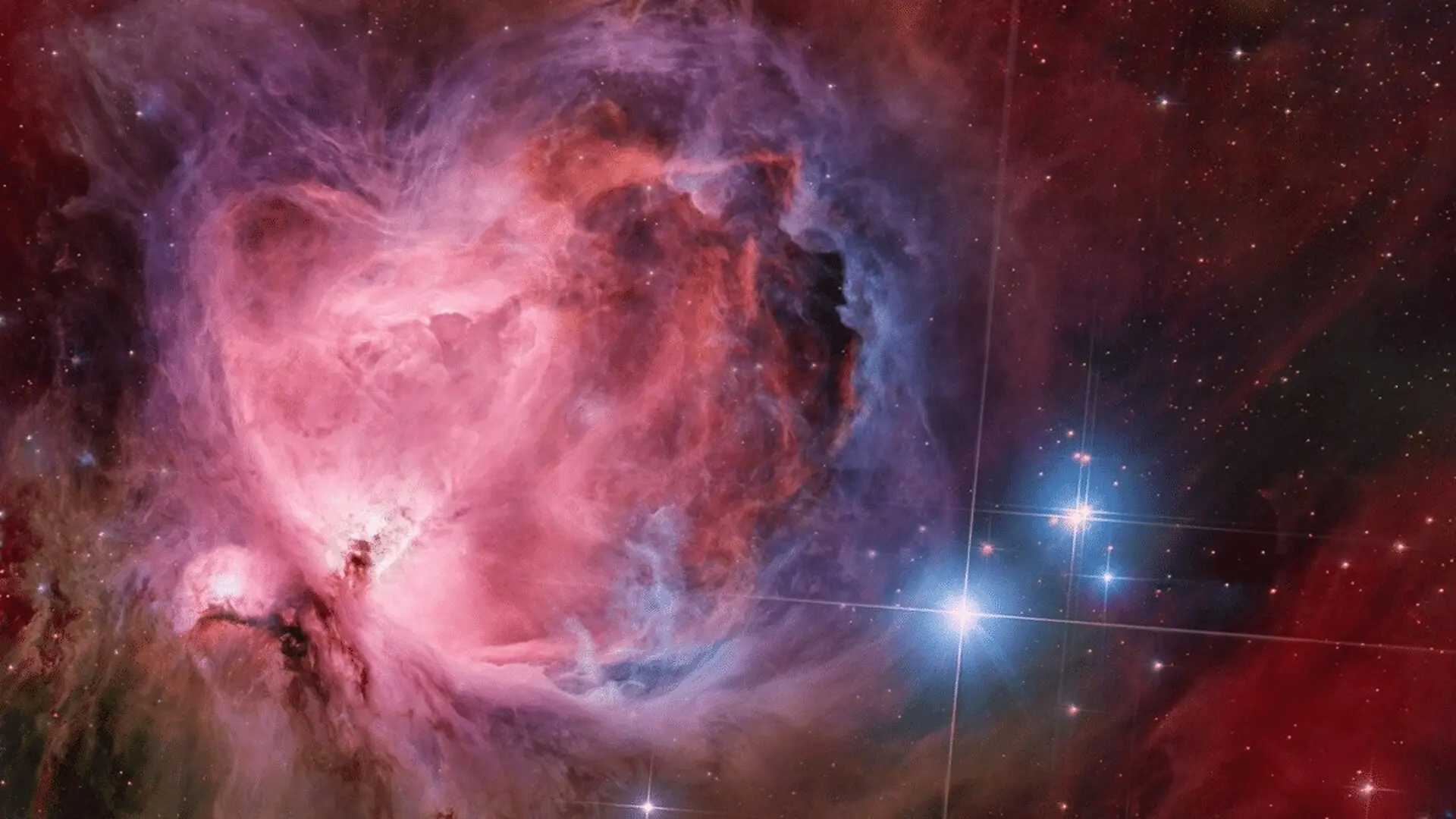
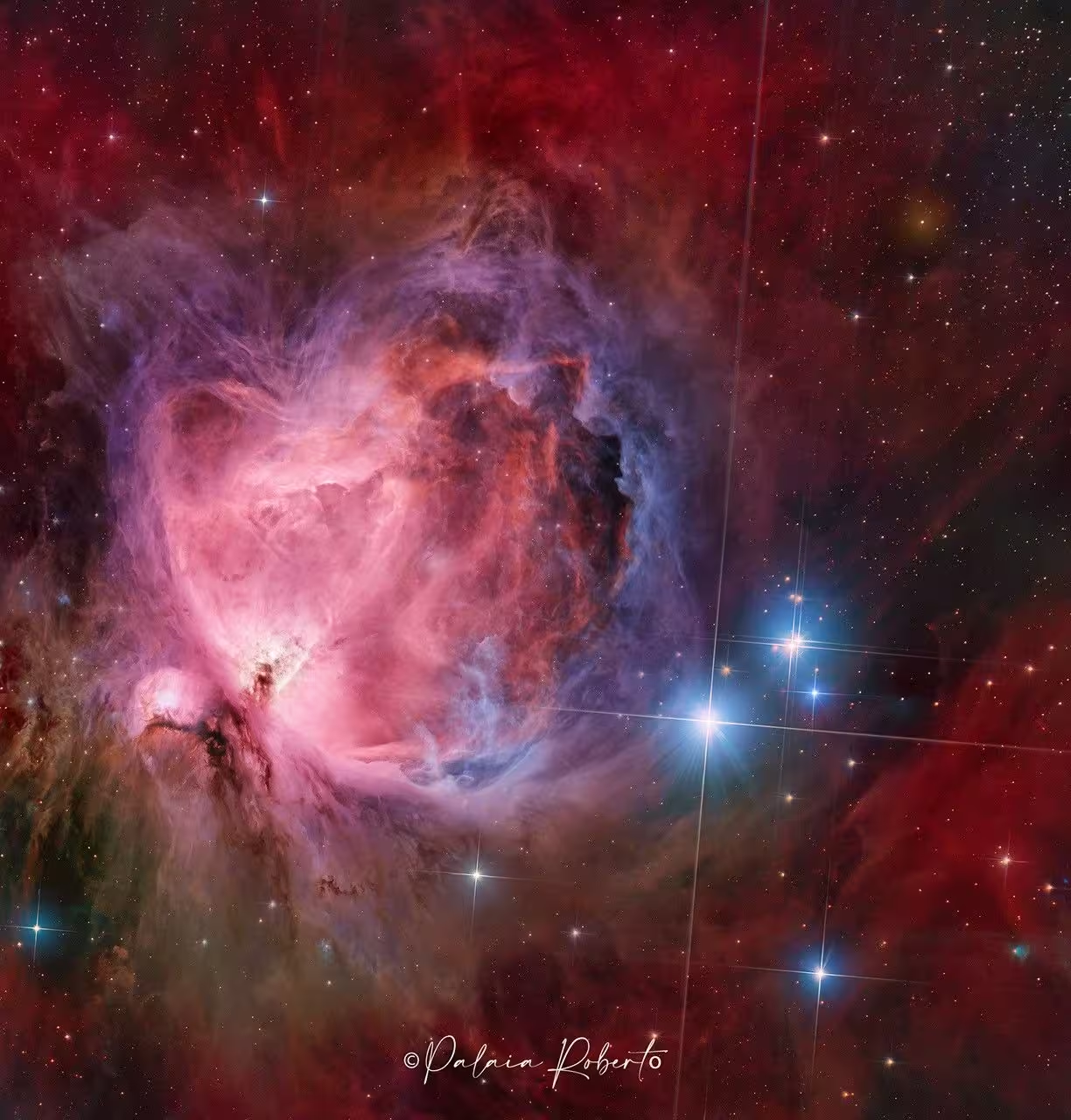
Located just 1,350 light-years away, the Great Orion Nebula serves as one of our galaxy’s most accessible laboratories for studying the violent and creative forces of star birth. Recognized as Messier 42 (M42), this sprawling stellar nursery is tucked into the iconic constellation of Orion, appearing to the naked eye as a subtle glow within the hunter’s sword. As highlighted by NASA’s Astronomy Picture of the Day on October 26, 2026, the nebula remains a primary target for researchers seeking to decode the evolution of stars from cold, dark molecular clouds.
A Front-Row Seat to Galactic Creation
Spanning roughly 24 light-years, the nebula is merely the most visible component of the massive Orion Molecular Cloud Complex. While casual observers see a faint patch of light, professional instruments reveal a dynamic, high-energy environment where intense radiation from newly formed stars shapes the surrounding gas. These massive, hot stars emit powerful ultraviolet light, ionizing hydrogen gas and causing it to glow in the characteristic red hues seen in long-exposure imagery.
The interplay between these stellar powerhouses and the dense, dark dust lanes creates a complex structural landscape. By utilizing both visible light and infrared wavelengths, astronomers can peel back the layers of the nebula. Infrared observation is particularly critical, as it allows researchers to peer through the thick, obscuring dust to identify newborn stars and hidden structures that are otherwise invisible to standard optical telescopes.
Decoding the Physics of Star Formation
The study of M42 provides a unique opportunity to witness the lifecycle of stellar material. The nebula is effectively a battlefield where the forces of gravity and radiation collide. Gravity pulls gas and dust together to trigger the birth of new stars, while the radiation and stellar winds from those same stars push the remaining material outward, creating the intricate cavities and bright fronts observed by modern telescopes.
Understanding these processes requires a multi-spectral approach. Because different elements and temperatures emit radiation at distinct wavelengths, scientists must synthesize data from across the electromagnetic spectrum to create a complete picture of the region’s physical conditions. These observations allow for the mapping of gas distribution and the identification of regions that remain cold enough to facilitate future star formation.
As one of the most studied objects in the night sky, the Great Orion Nebula continues to provide essential data on how young stars interact with their parent clouds. Its proximity allows for a level of detail that is simply not possible with more distant nebulae, making it an enduring cornerstone of modern astrophysics.
This article has been fact checked for accuracy, with information verified against reputable sources. Learn more about us and our editorial process.
Last reviewed on .
Article history
- Latest version
Reference(s)
- Bonnell, Jerry. “2026 October 26 - M42: The Great Nebula in Orion - NASA Science.”, October 26, 2026 NASA <https://science.nasa.gov/image-article/apod/2026-october-26-m42-the-great-nebula-in-orion/>.
Cite this page:
- Posted by Aisha Ahmed