Why River Blindness Antibodies Disperse Far Beyond Known Breeding Sites
A study of 2,480 residents in Ghana reveals unexpected spatial patterns in parasite exposure, challenging current monitoring guidelines.
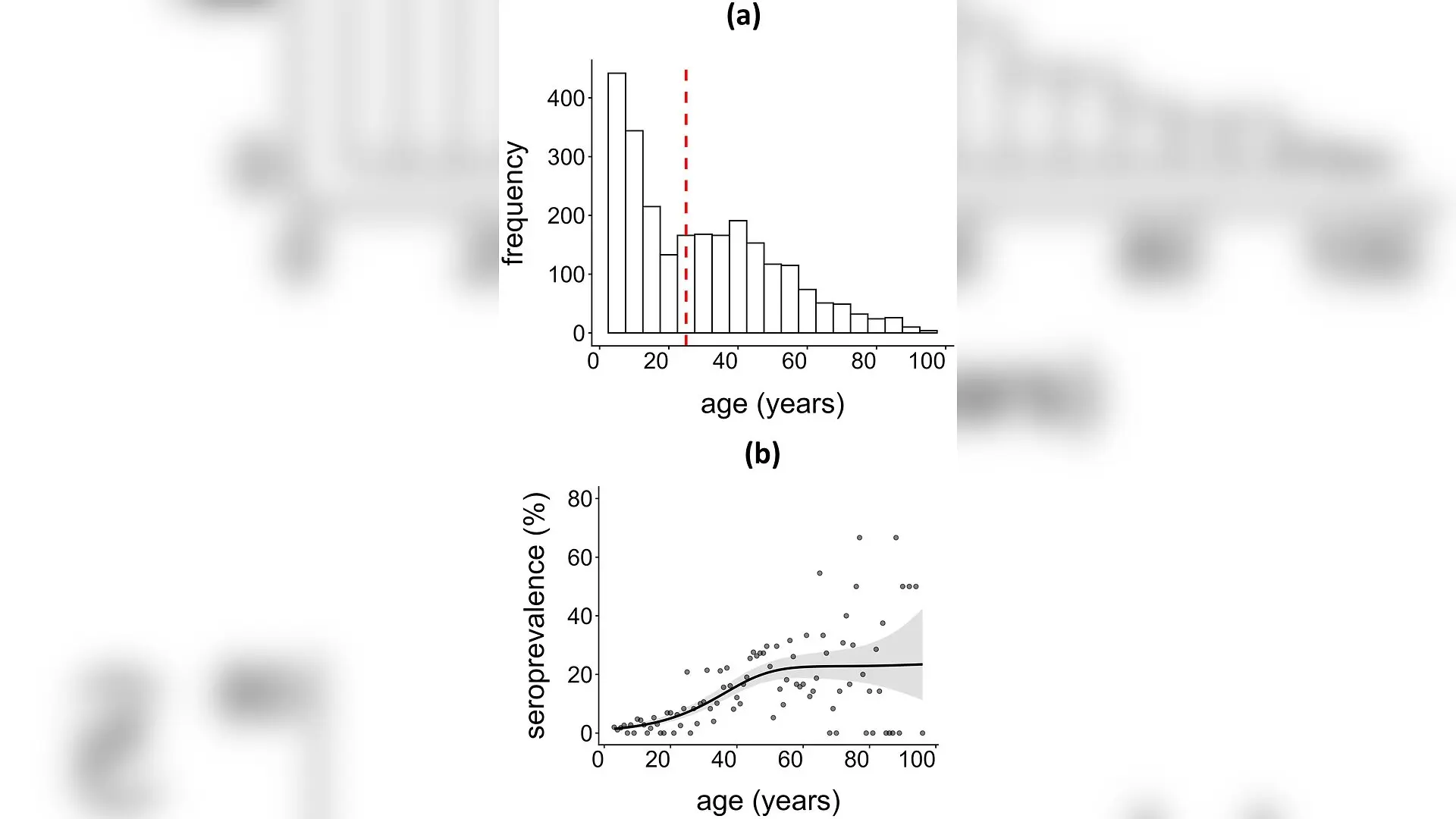
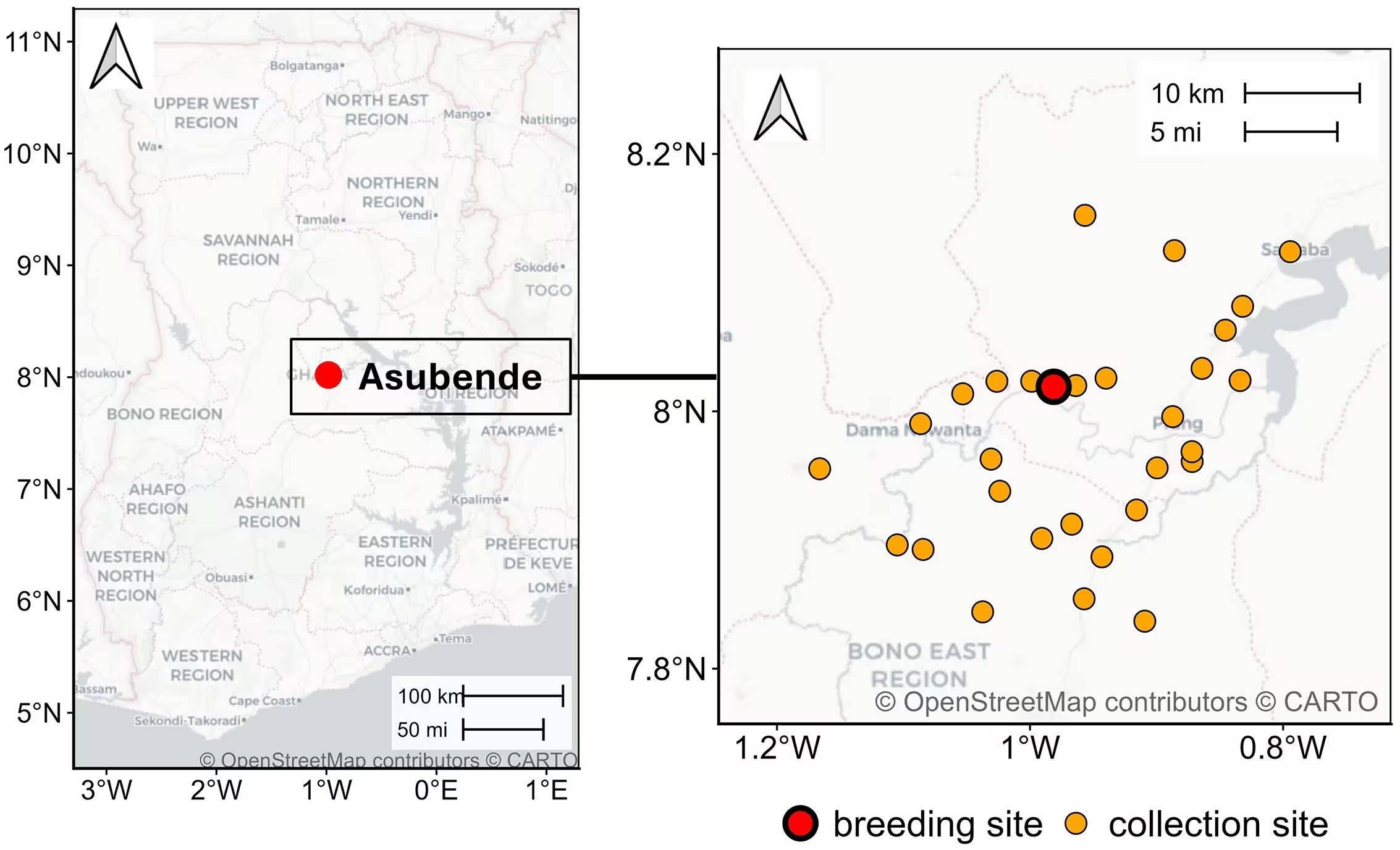
Living near fast-flowing rivers in parts of sub-Saharan Africa, millions of people remain exposed to the bites of tiny blackflies that can transmit a parasitic worm causing severe skin disease and blindness. A cross-sectional study involving 2,480 participants across 30 communities in the Pru East district of Ghana investigated how exposure to this infection varies with distance from a known vector breeding site. The research was published in PLOS Neglected Tropical Diseases and led by researchers from institutions including the University of Energy and Natural Resources and the University of Greenwich.
How Does Distance From River Breeding Sites Shape Parasite Exposure in Ghana?
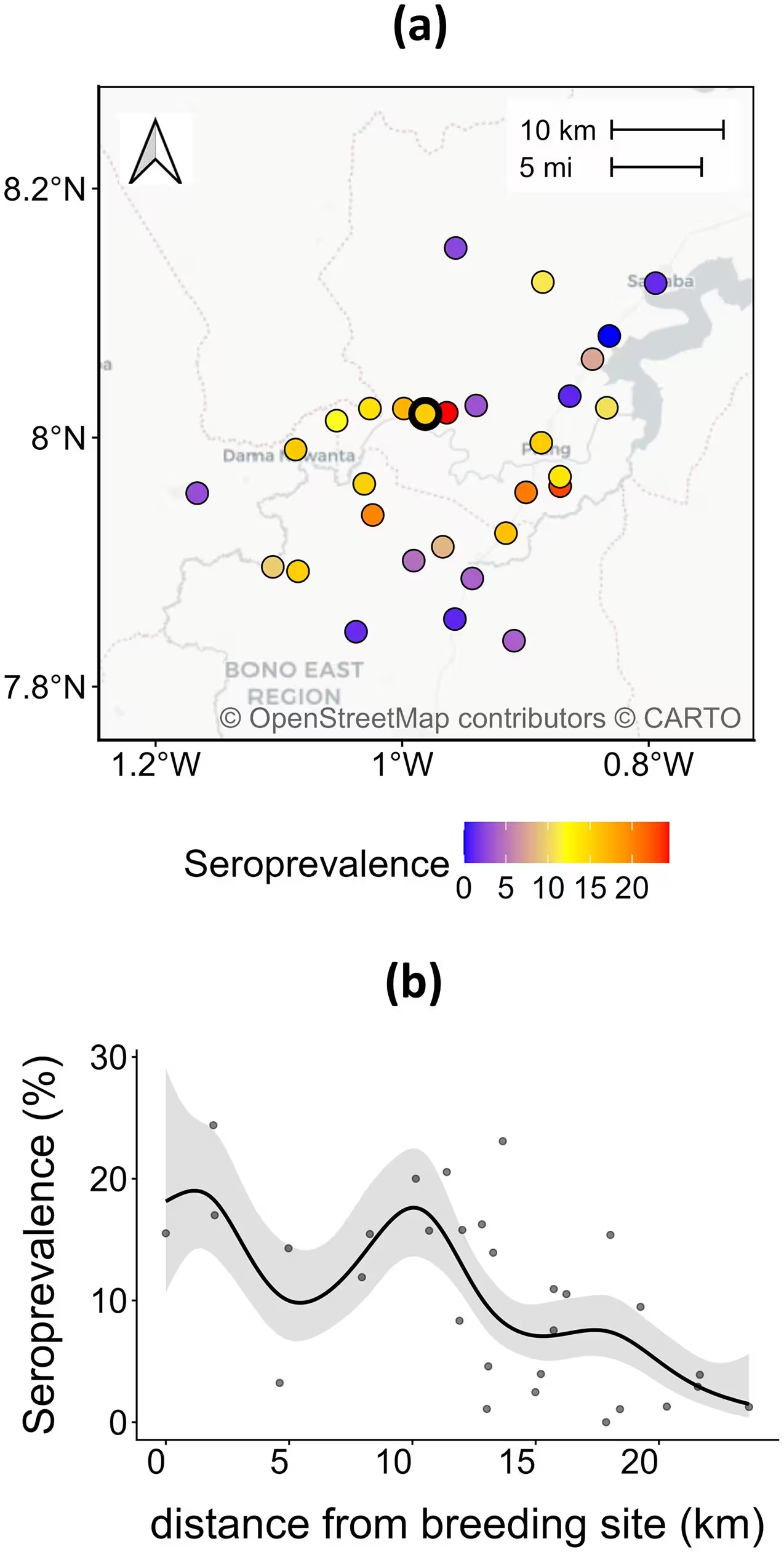
The study mapped the spatial distribution of antibodies against a specific parasite antigen called Ov16, which signals exposure to the parasitic worm Onchocerca volvulus. Across all participants aged 3 to 96 years, the overall seroprevalence was found to be 10%. The analysis revealed a clear spatial trend where antibody positivity tended to decline as the distance from the river breeding site increased. This pattern mirrors earlier entomological findings from the same region showing that blackfly populations are densest close to their breeding habitats.
Participants reported high adherence to mass drug administration programs using ivermectin, with over 97% of interviewed individuals having taken the medication previously. Despite decades of these treatments, the persistence of positive antibody tests in outlying settlements highlights the complex challenges of tracking disease transmission as regions approach elimination goals set by the World Health Organization.
Why Do Young Children Near Breeding Sites Present Surprising Results?
World Health Organization guidelines recommend testing 2,000 children under 10 years old to determine if transmission has been interrupted enough to halt drug distribution. In this study, the research team sampled 584 children under 10 across the 30 sites, identifying 9 seropositive children. Interestingly, no seropositive children were found directly at the primary breeding site or within a 5-kilometer radius of it. Instead, seropositive children were detected further away, up to 18 kilometers from the water source.
The authors note that the small number of children sampled per site and the very low overall positivity rate among young participants made it difficult to establish a definitive spatial trend for this age group. When adjusted for the sensitivity and specificity of the rapid diagnostic tests used, the seroprevalence in children under 10 was calculated to be 0.7%. Because the World Health Organization framework allows virtually no positive cases in this age group to justify stopping treatment, these scattered positive results indicate that transmission may still be occurring beyond the immediate riverbanks.
What Are the Limitations of Current Surveillance Strategies?
The findings point to potential blind spots in conventional monitoring programs that focus sampling primarily on first-line villages situated right next to rivers. Because blackflies are known to disperse many kilometers from their breeding sites, relying solely on riverside checks can misrepresent the broader epidemiological situation. If health authorities restrict surveys to the immediate breeding zones, they might overlook ongoing transmission occurring further away.
The study also highlights ongoing technical challenges with available diagnostic tools. Rapid diagnostic tests can sometimes produce false results, which complicates decision-making when prevalence is extremely low. The authors emphasize the need for larger sample sizes, broader geographic surveillance, and improved diagnostics to ensure that communities do not prematurely stop mass treatments before transmission is truly interrupted.
The research was published in PLOS Neglected Tropical Diseases on November 23, 2026.
This article has been fact checked for accuracy, with information verified against reputable sources. Learn more about us and our editorial process.
Last reviewed on .
Article history
- Latest version
Reference(s)
- Kyomuhangi, Irene., et al. “Spatial heterogeneity in Onchocerca volvulus IgG4 seroprevalence around a blackfly (Simulium damnosum s.l.) breeding site in Ghana and its implications for onchocerciasis serosurveillance.” PLOS Neglected Tropical Diseases, vol. 20, no. 11, November 23, 2026, pp. e0014334 Public Library of Science (PLoS), doi: 10.1371/journal.pntd.0014334. <https://doi.org/10.1371/journal.pntd.0014334>.
Cite this page:
- Posted by Zubair Ali