French Study of 7,972 Mothers Reveals Higher Cesarean Risks After Labor Induction, But What Does Daily Data Show
Day-by-day analysis of term births questions whether American routine induction guidelines apply to European maternity wards.

A new retrospective study of 7,972 first-time mothers in France reveals that elective labor induction is frequently linked to a higher risk of cesarean delivery compared to ongoing pregnancies. Led by obstetrician Denis Gallot and researcher Aude Del Nista from CHU Clermont-Ferrand, the research analyzed births occurring at or beyond 37 weeks of gestation across 9 public maternity units between 2018 and 2019.
The study evaluates whether the widespread American recommendation for routine labor induction at 39 weeks applies safely to European populations with different baseline practices. Obstetricians often balance expectant management, which allows labor to start naturally, against labor induction, a medical intervention using hormones or mechanical methods to initiate uterine contractions. While a major U.S. clinical trial previously suggested that induction at 39 weeks lowers cesarean rates in low-risk women, European health data and retrospective cohort findings have remained mixed, prompting closer local evaluation.
How Day-by-Day Analysis Tracks Delivery Risks
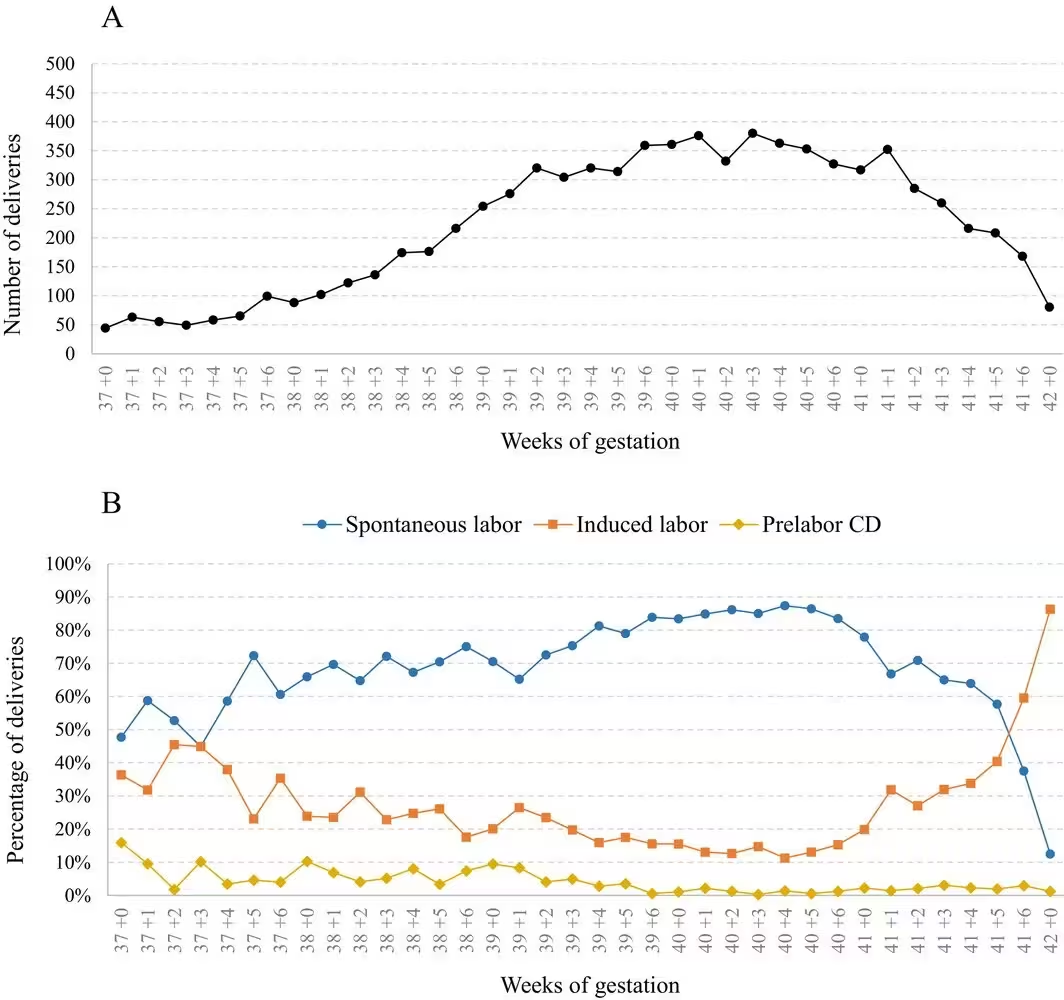
To capture fine-grained shifts in surgical risk, the team calculated daily delivery rates rather than grouping data into broad weekly blocks. They tracked ongoing pregnancies as a dynamic group of women who remained undelivered at the start of each gestational day. Out of the total cohort, 74% experienced spontaneous labor, 22.8% underwent labor induction, and 3.2% had a scheduled cesarean before labor began. The overall cesarean delivery rate across the population was 16.4%.
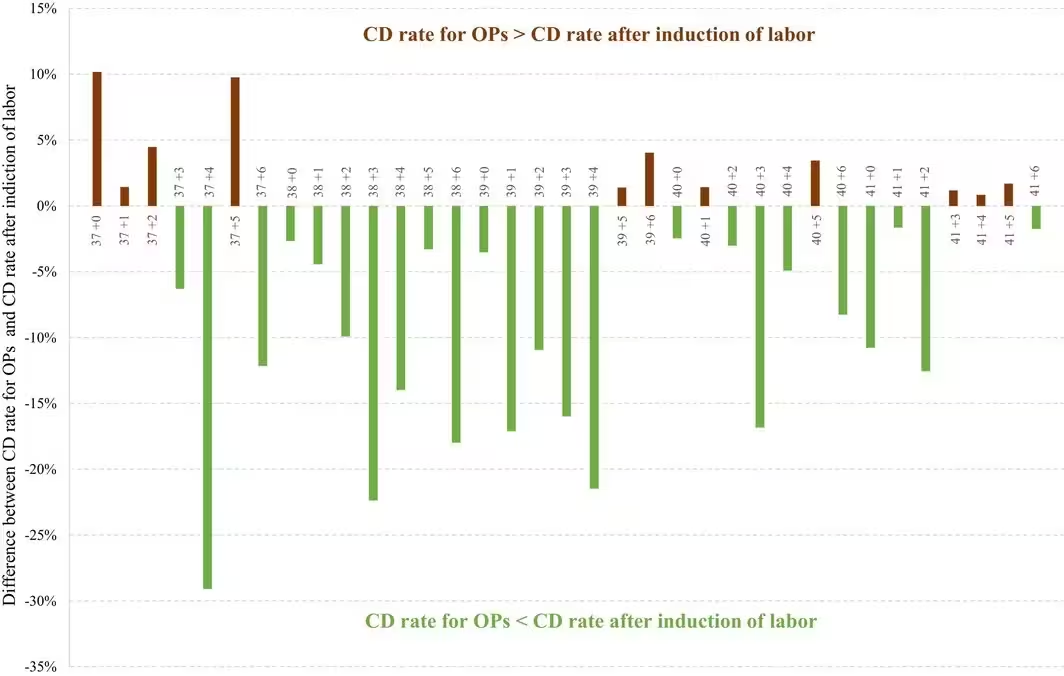
The analysis, published in Acta Obstetricia et Gynecologica Scandinavica, demonstrated that cesarean rates following induction frequently exceeded those of ongoing pregnancies at individual gestational days. Although induction occasionally showed lower cesarean rates at a few isolated time points, those differences generally stayed below 5%. Conversely, when ongoing pregnancies showed lower surgical rates, the differences were larger and more consistent across the calendar of term gestation.
Testing Low-Risk Pregnancies and Daily Variability
To account for underlying health factors that might skew surgical rates, the authors evaluated a restricted low-risk subgroup containing 5,081 women under the age of 35 with a body mass index strictly below 30. In this healthy cohort, the overall cesarean rate dropped to 13.2%, yet the day-by-day comparison still showed a predominance of higher surgical risks associated with induction.
The investigators noted that daily fluctuations in risk numbers reflect both limited sample sizes at specific calendar days and possible residual confounding from unmeasured medical conditions. Because women selected for induction often carry hidden medical indications that independently raise surgical risk, direct causal comparisons remain complex. Furthermore, women remaining pregnant past 41 weeks represent an increasingly selected group, which may explain why surgical differences shifted near the end of term.
Why Routine Induction Policies Require Local Caution
The findings argue against a broad generalization of routine 39-week induction policies within French healthcare settings. Implementing universal induction at 39 weeks would require a massive reorganization of maternity units, increasing workloads and potentially straining delivery ward resources. Patient preferences regarding birth plans and growing public conversations around obstetric care further complicate clinical shifts.
The authors emphasize that observational data cannot replace randomized controlled trials when determining policy changes. Definitive guidance for French maternity practices will depend on ongoing randomized investigations, such as the prospective trial designed to evaluate routine induction safety in local nulliparous populations.
The research was published in Acta obstetricia et gynecologica Scandinavica on November 27, 2026.
This article has been fact checked for accuracy, with information verified against reputable sources. Learn more about us and our editorial process.
Last reviewed on .
Article history
- Latest version
Reference(s)
- Del Nista, Aude., et al. “Cesarean delivery risk in term nulliparous women: Labor induction versus expectant management.” Acta Obstetricia et Gynecologica Scandinavica, November 27, 2026 Wiley, doi: 10.1111/aogs.70397. <https://doi.org/10.1111/aogs.70397>.
Cite this page:
- Posted by Tariq Hassan