Simple Ribbed Vanes On Tractor Spreaders Dramatically Improve Fertilizer Distribution
Adding raised internal ribs to twin-disc fertilizer spreaders cuts down chaotic granule collisions and extends effective working widths.
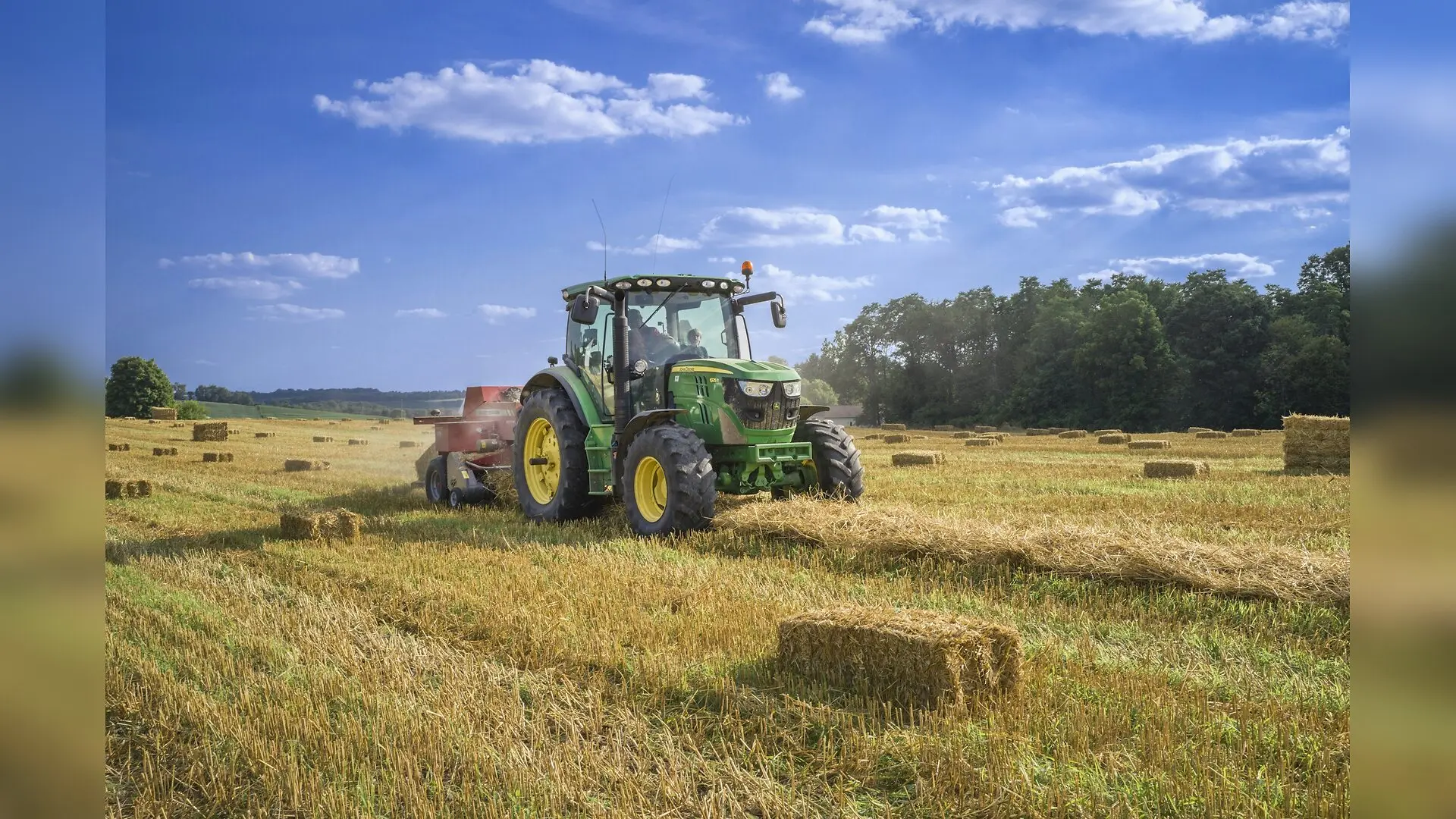
When spreading fertilizer across a large field, tiny changes in how machine parts guide granular material can mean the difference between a thriving crop and wasted resources. Agricultural engineers have long struggled with the chaotic bouncing and side-to-side rolling of fertilizer granules as they fly off the spinning discs of tractor-mounted spreaders. To tackle this physical puzzle, a team of researchers designed and tested four distinct internal shapes for fertilizer distribution vanes, asking whether adding tiny raised ribs could calm the flow of particles.
The study, published in PLOS One by Fırat Kömekçi and colleagues at Ege University, explores how modifying the inside of these metal guide channels alters the trajectory of fertilizer. Conventional spreaders rely on smooth, hollow channels that let fertilizer granules collide randomly with one another. These unguided collisions send particles flying off the disc at unpredictable angles, creating uneven distribution patterns in the field.
How did the researchers test different vane designs?
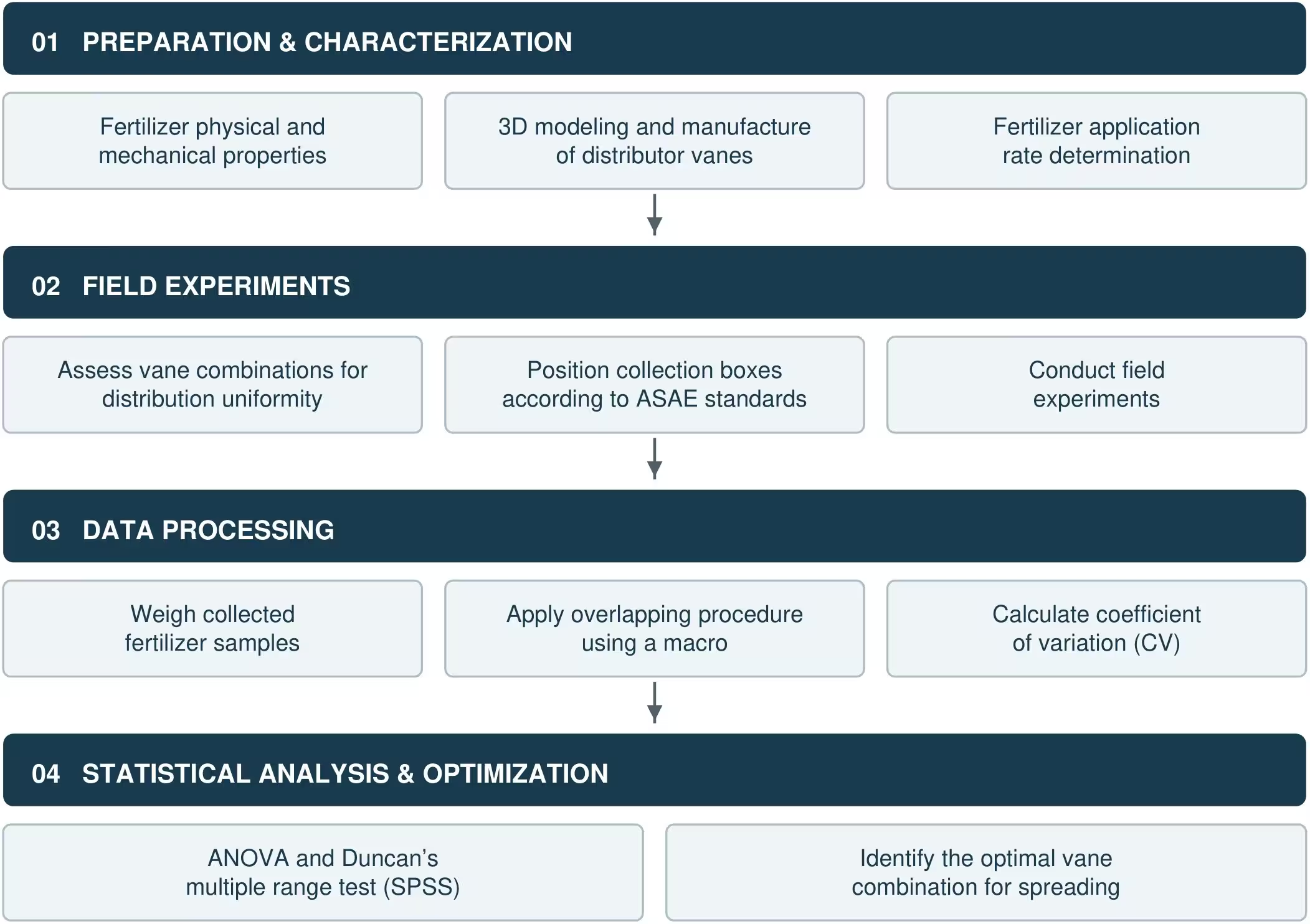
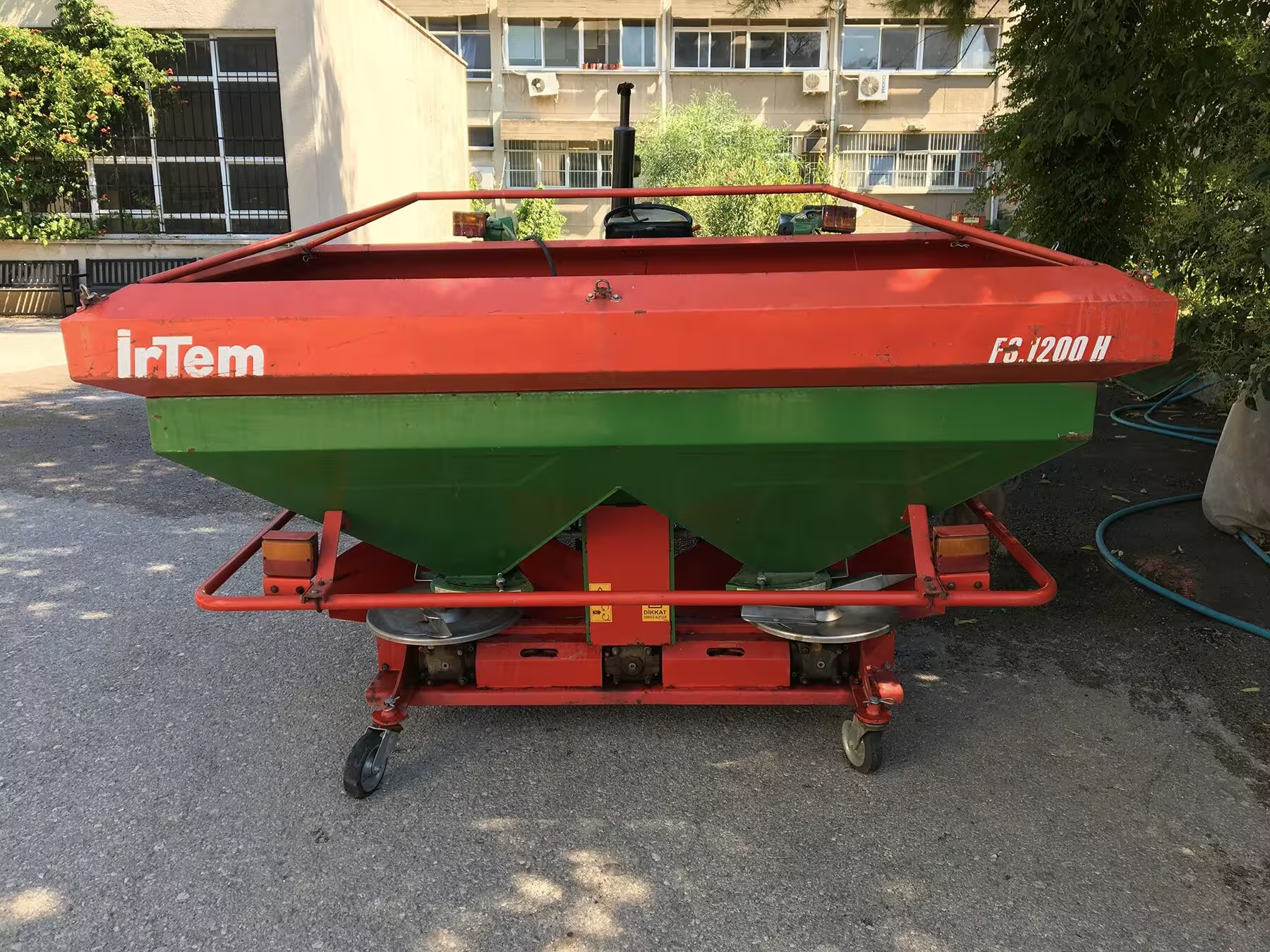
To isolate the mechanical effect of vane geometry from outside variables, the team used a single standardized compound fertilizer, specifically NPK 15-15-15, with a measured bulk density of 1,034 kilograms per cubic meter. They manufactured four custom C-shaped vane configurations named hollow-channel, double-channel, quad-channel, and inclined-channel. Each configuration was mounted onto a twin-disc fertilizer broadcaster with a 1,200-liter hopper capacity.
Controlled bench and field trials were conducted in strict accordance with ASAE S341.4 standards. The tractor power take-off speed was locked at 540 rotations per minute using a variable-frequency drive to prevent engine slip, and a target flow rate of about 0.84 kilograms per second was maintained. Plastic collection trays equipped with internal cellular louvers captured the flying granules across working widths of 14.64 meters, 16.51 meters, and 17.76 meters. The team then calculated the coefficient of variation, a standard statistical measure where lower percentages indicate a more uniform spread.
What did the experiments reveal about distribution uniformity?
Statistical analysis using a One-Way ANOVA and Duncan’s Multiple Range Test revealed a significant difference among the vane types, with the quad-channel design outperforming the others. At a working width of 14.64 meters, the quad-channel vane configuration achieved a coefficient of variation of 10.12 percent, which falls into the acceptable agricultural threshold. When the working width was extended to 17.76 meters, the quad-channel design still maintained an acceptable coefficient of variation of 18.86 percent.
In contrast, the traditional hollow-channel design produced a coefficient of variation of 14.87 percent at the narrower 14.64-meter width, but saw performance degrade more rapidly at wider spans. Meanwhile, the double-channel and inclined-channel configurations proved largely ineffective, yielding unacceptable distribution uniformity across all tested working widths with values exceeding 20 percent.
Why do internal ribs improve fertilizer flow?
The superior performance of the quad-channel design stems from basic particle kinematics and surface friction. In a standard smooth vane, granules slide as an unguided mass that bounces wildly from side to side due to disc vibrations. The quad-channel configuration features four raised longitudinal ribs along the guidance face, which physically partition the main stream of fertilizer into smaller, controlled paths.
These raised ribs limit lateral scattering, force particles into parallel radial tracks, and introduce helpful wall friction that quickly absorbs random kinetic energy. By aligning the radial and tangential velocity components of every granule, the quad-channel design ensures that particles leave the disc edge at uniform horizontal discharge angles. This precise guidance eliminates excessive central mounding and builds a reliable overlapping trapezoidal spread pattern in the field.
What are the limits and next steps for this technology?
While the quad-channel vane offers a promising mechanical upgrade for twin-disc broadcasters, the authors note that these findings are based on a specific compound fertilizer and a fixed set of operating parameters. Different granule sizes, shapes, and moisture levels could alter the friction and flow dynamics. The team suggests that future investigations could combine physical field experiments with computational fluid dynamics and discrete element method simulations to refine vane geometries for an even wider variety of agricultural materials.
The research was published in PLOS One on November 24, 2026.
This article has been fact checked for accuracy, with information verified against reputable sources. Learn more about us and our editorial process.
Last reviewed on .
Article history
- Latest version
Reference(s)
- Kömekçi, Fırat., et al. “Shaping the spread: Influence of distributor vane design on fertilizer distribution uniformity.” PLOS One, vol. 21, no. 11, November 24, 2026, pp. e0363472 Public Library of Science (PLoS), doi: 10.1371/journal.pone.0363472. <https://doi.org/10.1371/journal.pone.0363472>.
Cite this page:
- Posted by Rabia Shah