Why Museum Visitors in China and Russia Choose Digital Tech
New research reveals that fun drives digital adoption in China, while reliability and ease of use matter most in Russia.
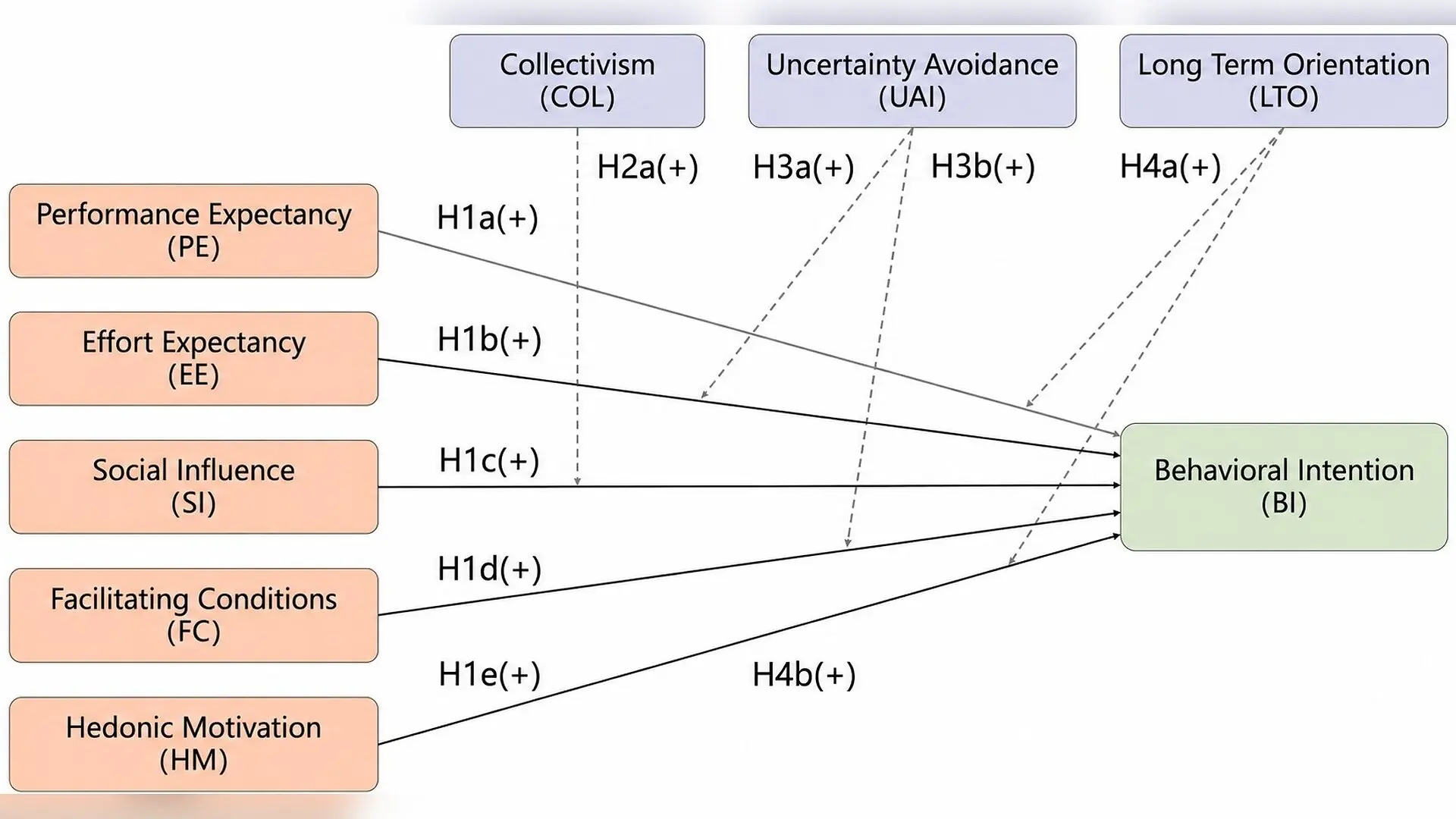
Museum visitors in China and Russia revealed surprising differences in what drives their willingness to use digital apps, online tours, and virtual reality guides during gallery visits. While most visitors agreed that useful digital tools make museum trips better, the specific features that turn curiosity into actual intent vary significantly between the two countries, depending partly on individual cultural values.
The study, published in the journal PLOS One, analyzed survey responses from 316 visitors in China and 307 visitors in Russia. Researchers Jing Chen, Xiaobin Li, Chuanhua Zhu, and Marina Biryukova wanted to understand how museum digitalization succeeds or fails. Instead of looking at a single gadget or app, the team examined the overall digital support system that museums offer before, during, and after a visit.
What Drives Visitor Acceptance of Museum Tech?
To evaluate these visitor choices, the researchers adapted a widely used behavioral framework known as the Unified Theory of Acceptance and Use of Technology, or UTAUT2. This model looks at several core drivers, including performance expectancy, effort expectancy, social influence, facilitating conditions, and hedonic motivation. The authors also added three individual-level cultural values using the CVSCALE method: collectivism orientation, uncertainty avoidance, and long-term orientation. This allowed the team to measure what actual people believe rather than assuming nationality alone dictates behavior.
In both the Chinese and Russian samples, performance expectancy and social influence showed remarkably similar, positive effects on whether visitors intended to use museum digital services. When visitors believed a digital tool would help them understand an exhibition or when their companions and peers recommended it, their willingness to try the technology increased. However, other factors showed striking contrasts between the two countries.
Fun Outperforms Ease in China, While Reliability Matters Most in Russia
The study found that hedonic motivation, or the fun, enjoyment, and immersion experienced during use, played a much stronger role in driving acceptance intention among Chinese respondents than among Russian respondents. For the Chinese sample, digital tools that provided immediate entertainment and emotional engagement were far more likely to be embraced.
By contrast, effort expectancy and facilitating conditions exerted a much stronger influence in the Russian sample. Russian visitors placed a significantly higher premium on ease of use, clear operating procedures, stable internet connections, and reliable on-site assistance. When these practical safeguards were present, Russian visitors showed a much greater readiness to adopt museum technology.
How Cultural Values Shape Technology Choices
The research also explored how individual cultural values act as moderators, strengthening or weakening the core UTAUT2 pathways. Collectivism orientation magnified the impact of social influence in both countries, showing that visitors who value group harmony and shared goals rely more heavily on peer recommendations and visible social cues. Uncertainty avoidance similarly amplified the importance of effort expectancy and facilitating conditions, meaning that visitors who dislike ambiguity need clear instructions and reliable support before they commit to using digital guides.
Furthermore, long-term orientation strengthened the effects of both performance expectancy and hedonic motivation. Visitors who focused on future returns and sustained personal growth viewed enjoyable digital experiences not just as empty entertainment, but as valuable aids for deeper cultural learning and long-term knowledge preservation.
Limitations and Future Directions
The authors noted several limitations to keep in mind when interpreting the findings. Because data collection methods differed slightly between the two countries, with online surveys used in China and offline intercept surveys conducted in Saint Petersburg, sample comparability could be affected. Additionally, two constructs related to practical support failed to establish full compositional invariance during testing, meaning that direct international comparisons for those specific pathways must be treated as exploratory.
Despite these caveats, the work offers valuable guidance for cultural institutions. Museums can better tailor their digital offerings by combining engaging, immersive storytelling for audiences seeking interactive fun with bulletproof technical reliability and clear instructions for visitors who prioritize ease and support.
The research was published in PLOS One on November 2, 2026.
This article has been fact checked for accuracy, with information verified against reputable sources. Learn more about us and our editorial process.
Last reviewed on .
Article history
- Latest version
Reference(s)
- Chen, Jing., et al. “Museum visitors’ acceptance of digital services in China and Russia: Extending UTAUT2 with individual-level cultural values.” PLOS One, vol. 21, no. 11, November 2, 2026, pp. e0357563 Public Library of Science (PLoS), doi: 10.1371/journal.pone.0357563. <https://doi.org/10.1371/journal.pone.0357563>.
Cite this page:
- Posted by Joseph Jackson