 Play Video
Stem Cell Transplantation for Hematologic Malignancies by Soiffer, 2004
BIOSCIENCE Genuine Download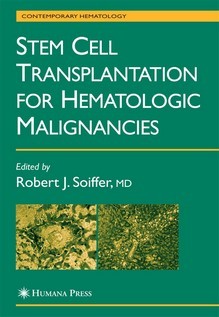
Synopsis
A comprehensive survey of the current state-of-the-art in hematopoietic stem cell transplantation for malignant disease. The authors focus on the indications an...
Read MoreDescription
The first part of the book focuses on indications and results of transplantation for acute leukemias, chronic myelogenous leukemia, lymphoma, multiple myeloma, and breast cancer, providing insight into the relative merits of transplant and nontransplant approaches to these disorders. Part II examines transplant-related complications including the pathophysiology and clinical consequences of acute and chronic GVHD, delayed immune reconstitution leading to infectious complications, and organ damage to the lung and liver.
Critic's Review
From The New England Journal of Medicine
Hematopoietic stem-cell transplantation has become an essential component of the treatment of a variety of diseases during the past several decades. The procedure can cure patients with potentially fatal cancers, bone marrow disease, hereditary disorders of metabolism, and severe congenital immunodeficiencies. Since 1957, when E. Donnall Thomas and his colleagues issued their first report of stem-cell transplantation, a stream of outstanding advances has led to remarkable improvements in clinical results. Advances in the management of complications, immunosuppression, and T-cell depletion of the graft have overcome some of the barriers against successful stem-cell transplantation that were once considered insurmountable. (Figure) Today, we can successfully transplant marrow from a related or unrelated donor, even if the marrow has HLA mismatches with the recipient, and we can use peripheral blood and umbilical-cord blood as alternative sources of stem cells. Consequently, indications for stem-cell transplantation have been widened considerably, thereby increasing dramatically the number of transplant recipients worldwide. An additional factor contributing to the increase in the indications for transplantation is the use of nonmyeloablative conditioning regimens. Transplantation after reduced-intensity conditioning, so-called mini-transplantation, decreases treatment-related toxic effects while preserving the immune-mediated graft-versus-tumor effect, thereby allowing transplantation in patients who are ineligible for conventional allografting because of age or underlying medical problems. This multiauthored book is a comprehensive review of the current state of the art in hematopoietic stem-cell transplantation for hematologic cancers and breast cancer. The list of 37 authors includes renowned researchers and clinicians who are affiliated with outstanding North American institutions, and their experience is reflected in their contributions to the book. The 22 chapters are grouped into five parts, the totality of which gives a multidimensional view of hematopoietic stem-cell transplantation. The first part concerns the indications and results of transplantation for acute leukemia, myelodysplasia, chronic myelogenous leukemia, Hodgkin's and non-Hodgkin's lymphomas, multiple myeloma, and breast cancer. It discusses the relative merits of transplantation and non-transplant-related approaches to these disorders. The second part covers a range of important transplantation-related complications, including the pathophysiology and clinical consequences of acute and chronic graft-versus-host disease, the delayed immune reconstitution that leads to infectious complications, post-transplantation lymphoproliferative disease associated with Epstein-Barr virus infection, and noninfectious damage to the lungs and liver. The last chapter of this section tackles the concept of health-related quality of life in patients after hematopoietic stem-cell transplantation. In the third part of the book, four chapters review the most important issues related to sources of donor stem cells, in particular the advantages and disadvantages of peripheral-blood stem cells as compared with traditional bone marrow transplantation from siblings or HLA-matched unrelated donors. Alternative sources of hematopoietic stem cells, such as haploidentical marrow cells and cord-blood transplants, are covered in two chapters. In the fourth part, two additional chapters on graft engineering review the process of purging the stem-cell graft to eliminate contaminating tumor cells in autologous transplantation and T-cell depletion in the allogeneic setting to prevent graft-versus-host disease. Finally, the last part of the book contains two chapters with a timely overview of two approaches that take advantage of the graft-versus-tumor effect: donor lymphocyte infusions and nonmyeloablative transplantation. All of the chapters are informative and contain carefully compiled, extensive lists of references. There is some unavoidable overlap in subject matter and variations in style, conciseness, and depth. More extensive focus could have been given to autologous stem-cell transplantation for myelodysplasia and to the problem of adenoviral infections. Nevertheless, the editor has achieved his stated goal of providing students, physicians, and other health care professionals with the latest information that is available in this field. This book belongs in every facility that performs hematopoietic stem-cell transplantation. Miguel A. Sanz, M.D., Ph.D.
Copyright © 2004 Massachusetts Medical Society. All rights reserved. The New England Journal of Medicine is a registered trademark of the MMS.
Review
"Current transplant approaches to the individual hematologic malignancies are discussed and the literature critiqued. The diverse complications of transplantation are discussed in considerable detail; the authors clearly define the underlying pathophysiology as well as state-of-the-art treatment approaches. Chapters on the new field of alternative graft sources is one of the book's best features and include unrelated, haploidentical and umbilical cord transplantation. This is a high-quality publication that is easy to read and not as overwhelming as the larger, more comprehensive transplant books. It is full of helpful information and references. "-Doody's Health Sciences Book Review Journal
"This book provides a timely update and a valuable summary of this rapidly evolving field." -Annals of Internal Medicine
"...a comprehensive review of the current state of the art in hematopoietic setm-cell transplantation for hematologic cancers and breast cancer...belongs in every facility that performs hematopoietic stem-cell transplantation." - New England Journal of Medicine
From the Back Cover
Over the past several years, fundamental notions about transplantation have changed to such a degree that even the once familiar term, bone marrow transplant, is becoming increasingly outdated. In Stem Cell Transplantation for Hematologic Malignancies, leading investigators and physicians/clinicans comprehensively survey the current state-of-the-art in hematopoietic stem cell transplantation for malignant disease. The authors focus on the indications and results of transplantation for acute leukemia, chronic myelogenous leukemia, lymphoma, multiple myeloma, and breast cancer, providing insight into the relative merits of transplant and nontransplant approaches to these disorders. Special attention is given to transplant-related complications, including the pathophysiology and clinical consequences of acute and chronic graft-vs-host disease (GVHD), delayed immune reconstitution leading to infectious complications, and organ damage to the lung and liver. Additional chapters address the sources of stem cells and the effects of graft manipulation used to eliminate residual contaminating tumor cells in autologous transplantation, or to reduce the number of T lymphocytes causing GVHD in allogenic transplantation. Also discussed are the role of donor lymphocyte infusions in the treatment and prevention of relapse after stem cell transplantation and their influence on the development of nonmyeloablative transplantation.
Comprehensive and state-of-the-art, Stem Cell Transplantation for Hematologic Malignancies outlines the many exciting advances that are working toward realization today while fully explaining the process of stem cell transplantation for malignant disease.
Review by:
Specification
Print books like other physical objects have physical characteristics that are important to retailers. When a retailer is preparing to sell an item, they have to know how much space it will take up on the shelves, how much it weighs, and more. These physical specs also help consumers visualize the size of a book. Physical specs include the dimensions, the weight, and the page count of a book.
Disclaimer: The information on this website is provided on "as is, as available basis" without warranty of any kind. BIOSCIENCE is not responsible for any omissions, inaccuracies or other errors in the information it publishes. All warranties with respect to this information are disclaimed. The trademarks, marques and logos of the publisher(s), author(s), distributor(s) of the books, etc. are the property of their respective owners.